
What Is the Mediterranean Diet?
What is the Mediterranean Diet?
The Mediterranean Diet is a way of eating that emphasizes plant-based foods and healthy fats. You focus on overall eating patterns rather than following strict formulas or calculations.
In general, you’ll eat:
Lots of vegetables, fruit, beans, lentils and nuts.A good amount of whole grains, like whole-wheat bread and brown rice.Plenty of extra virgin olive oil (EVOO) as a source of healthy fat.A good amount of fish, especially fish rich in omega-3 fatty acids.A moderate amount of natural cheese and yogurt.Little or no red meat, choosing poultry, fish or beans instead of red meat.Little or no sweets, sugary drinks or butter.A moderate amount of wine with meals (but if you don’t already drink, don’t start).This is how people ate in certain Mediterranean countries in the mid-20th century. Researchers have linked these eating patterns with a reduced risk of coronary artery disease (CAD). Today, healthcare providers recommend this eating plan if you have risk factors for heart disease or to support other aspects of your health.
A dietitian can help you modify your approach as needed based on your medical history, underlying conditions, allergies and preferences.
What are the benefits of the Mediterranean Diet?Video content: This video is available to watch online.
View video online (https://cdnapisec.kaltura.com/p/2207941/sp/220794100/playManifest/entryId/1_rsnc98wd/flavorId/1_5f3sgelj/format/url/protocol/https/a.mp4)
The mediterranean diet allows you to focus on overall eating patterns rather than following strict formulas or calculations.
The mediterranean diet allows you to focus on overall eating patterns rather than following strict formulas or calculations.
The Mediterranean Diet has many benefits, including:
Lowering your risk of cardiovascular disease, including a heart attack or stroke.Supporting a body weight that’s healthy for you.Supporting healthy blood sugar levels, blood pressure and cholesterol.Lowering your risk of metabolic syndrome.Supporting a healthy balance of gut microbiota (bacteria and other microorganisms) in your digestive system.Lowering your risk for certain types of cancer.Slowing the decline of brain function as you age.Helping you live longer.The Mediterranean Diet has these benefits because it:
Limits saturated fat and trans fat. You need some saturated fat, but only in small amounts. Eating too much saturated fat can raise your LDL (bad) cholesterol. A high LDL raises your risk of plaque buildup in your arteries (atherosclerosis). Trans fat has no health benefits. Both of these “unhealthy fats” can cause inflammation.Encourages healthy unsaturated fats, including omega-3 fatty acids. Unsaturated fats promote healthy cholesterol levels, support brain health and combat inflammation. Plus, a diet high in unsaturated fats and low in saturated fat promotes healthy blood sugar levels.Limits sodium. Eating foods high in sodium can raise your blood pressure, putting you at a greater risk for a heart attack or stroke.Limits refined carbohydrates, including sugar. Foods high in refined carbs can cause your blood sugar to spike. Refined carbs also give you excess calories without much nutritional benefit. For example, such foods often have little or no fiber.Favors foods high in fiber and antioxidants. These nutrients help reduce inflammation throughout your body. Fiber also helps keep waste moving through your large intestine and helps maintain healthy blood sugar levels. Antioxidants protect you against cancer by warding off free radicals.The Mediterranean Diet includes many different nutrients that work together to help your body. There’s no single food or ingredient responsible for the Mediterranean Diet’s benefits. Instead, the diet is healthy for you because of the combination of nutrients it provides.
Think of a choir with many people singing. One voice alone might carry part of the tune, but you need all the voices to come together to achieve the full effect. Similarly, the Mediterranean Diet works by giving you an ideal blend of nutrients that harmonize to support your health.
Mediterranean Diet food listThe Mediterranean Diet encourages you to eat plenty of some foods (like whole grains and vegetables) while limiting others. If you’re planning a grocery store trip, you might wonder which foods to buy. Here are some examples of foods to eat often with the Mediterranean Diet.
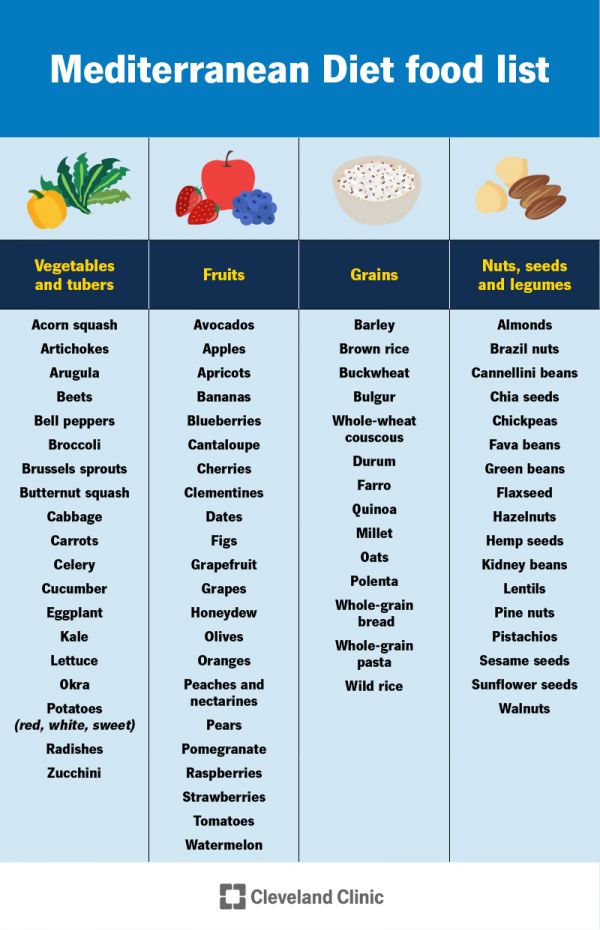 From colorful veggies to crunchy seeds, there's a wide range of nutritious foods to choose from when following a Mediterranean Diet.
Image content: This image is available to view online.
View image online (https://my.clevelandclinic.org/-/scassets/images/org/health/articles/16037-mediterranean-diet-chart-cv)
From colorful veggies to crunchy seeds, there's a wide range of nutritious foods to choose from when following a Mediterranean Diet.
Mediterranean Diet serving goals and sizesA fridge and pantry full of nutritious foods are great for starters. But where do you go from there? How much of each food do you need? It’s always best to talk to a dietitian to get advice tailored to your needs as you get started. The chart below offers some general guidance on serving goals and serving sizes, according to the type of food.
FoodServing GoalServing SizeTipsFresh fruits and vegetables.Fruit: 3 servings per day; Veggies: At least 3 servings per day.Fruit: ½ cup to 1 cup; Veggies: ½ cup cooked or 1 cup raw.Have at least 1 serving of veggies at each meal; Choose fruit as a snack.Whole grains and starchy vegetables (potatoes, peas and corn).3 to 6 servings per day.½ cup cooked grains, pasta or cereal; 1 slice of bread; 1 cup dry cereal.Choose oats, barley, quinoa or brown rice; Bake or roast red skin potatoes or sweet potatoes; Choose whole-grain or whole-wheat versions of bread, cereal, couscous and pasta; Limit or avoid refined carbohydrates.Extra virgin olive oil (EVOO).1 to 4 servings per day.1 tablespoon.Use instead of vegetable oil and animal fats (butter, sour cream, mayo); Drizzle on salads, cooked veggies or pasta; Use as dip for bread.Legumes (beans and lentils).3 servings per week.½ cup.Add to salads, soups and pasta dishes; Try hummus or bean dip with raw veggies; Opt for a veggie or bean burger.Fish.3 servings per week.3 to 4 ounces.Choose fish rich in omega-3s, like salmon, sardines, herring, tuna and mackerel.Nuts.At least 3 servings per week.¼ cup nuts or 2 tablespoons nut butter.Ideally, choose walnuts, almonds and hazelnuts; Add to cereal, salad and yogurt; Choose raw, unsalted and dry roasted varieties; Eat alone or with dried fruit as a snack.Poultry.No more than once daily (fewer may be better).3 ounces.Choose white meat instead of dark meat; Eat in place of red meat; Choose skinless poultry or remove the skin before cooking; Bake, broil or grill it.Dairy.No more than once daily (fewer may be better).1 cup milk or yogurt; 1 ½ ounces natural cheese.Choose naturally low-fat cheese; Choose fat-free or 1% milk, yogurt and cottage cheese; Avoid whole-fat milk, cream, and cream-based sauces and dressings.Eggs.Up to 1 yolk per day.1 egg (yolk + white).Limit egg yolks; No limit on egg whites; If you have high cholesterol, have no more than 4 yolks per week.Red meat (beef, pork, veal and lamb).None, or no more than 1 serving per week.3 ounces.Limit to lean cuts, such as tenderloin, sirloin and flank steak.Wine (optional).1 serving per day (females); 2 servings per day (males).1 glass (3 ½ ounces).If you don’t drink, the American Heart Association cautions you not to start drinking; Talk to your healthcare provider about the benefits and risks of consuming alcohol in moderation.Baked goods and desserts.Avoid commercially prepared baked goods and desserts; Limit homemade goods to no more than 3 servings per week.Varies by type.Instead, choose fruit and nonfat yogurt; Bake using liquid oil instead of solid fats; whole grain flour instead of bleached or enriched flour; egg whites instead of whole eggs.FoodFresh fruits and vegetables.Serving GoalFruit: 3 servings per day; Veggies: At least 3 servings per day.Serving SizeFruit: ½ cup to 1 cup; Veggies: ½ cup cooked or 1 cup raw.TipsHave at least 1 serving of veggies at each meal; Choose fruit as a snack.Whole grains and starchy vegetables (potatoes, peas and corn).Serving Goal3 to 6 servings per day.Serving Size½ cup cooked grains, pasta or cereal; 1 slice of bread; 1 cup dry cereal.TipsChoose oats, barley, quinoa or brown rice; Bake or roast red skin potatoes or sweet potatoes; Choose whole-grain or whole-wheat versions of bread, cereal, couscous and pasta; Limit or avoid refined carbohydrates.Extra virgin olive oil (EVOO).Serving Goal1 to 4 servings per day.Serving Size1 tablespoon.TipsUse instead of vegetable oil and animal fats (butter, sour cream, mayo); Drizzle on salads, cooked veggies or pasta; Use as dip for bread.Legumes (beans and lentils).Serving Goal3 servings per week.Serving Size½ cup.TipsAdd to salads, soups and pasta dishes; Try hummus or bean dip with raw veggies; Opt for a veggie or bean burger.Fish.Serving Goal3 servings per week.Serving Size3 to 4 ounces.TipsChoose fish rich in omega-3s, like salmon, sardines, herring, tuna and mackerel.Nuts.Serving GoalAt least 3 servings per week.Serving Size¼ cup nuts or 2 tablespoons nut butter.TipsIdeally, choose walnuts, almonds and hazelnuts; Add to cereal, salad and yogurt; Choose raw, unsalted and dry roasted varieties; Eat alone or with dried fruit as a snack.Poultry.Serving GoalNo more than once daily (fewer may be better).Serving Size3 ounces.TipsChoose white meat instead of dark meat; Eat in place of red meat; Choose skinless poultry or remove the skin before cooking; Bake, broil or grill it.Dairy.Serving GoalNo more than once daily (fewer may be better).Serving Size1 cup milk or yogurt; 1 ½ ounces natural cheese.TipsChoose naturally low-fat cheese; Choose fat-free or 1% milk, yogurt and cottage cheese; Avoid whole-fat milk, cream, and cream-based sauces and dressings.Eggs.Serving GoalUp to 1 yolk per day.Serving Size1 egg (yolk + white).TipsLimit egg yolks; No limit on egg whites; If you have high cholesterol, have no more than 4 yolks per week.Red meat (beef, pork, veal and lamb).Serving GoalNone, or no more than 1 serving per week.Serving Size3 ounces.TipsLimit to lean cuts, such as tenderloin, sirloin and flank steak.Wine (optional).Serving Goal1 serving per day (females); 2 servings per day (males).Serving Size1 glass (3 ½ ounces).TipsIf you don’t drink, the American Heart Association cautions you not to start drinking; Talk to your healthcare provider about the benefits and risks of consuming alcohol in moderation.Baked goods and desserts.Serving GoalAvoid commercially prepared baked goods and desserts; Limit homemade goods to no more than 3 servings per week.Serving SizeVaries by type.TipsInstead, choose fruit and nonfat yogurt; Bake using liquid oil instead of solid fats; whole grain flour instead of bleached or enriched flour; egg whites instead of whole eggs.How do I create a Mediterranean Diet meal plan?
It’s important to consult with a primary care physician (PCP) or dietitian before making drastic changes to your diet or trying any new eating plan. They’ll make sure your intended plan is best for you based on your individual needs. They may also share meal plans and recipes for you to try at home.
In general, when thinking about meals, you’ll want to collect some go-to options and recipes for breakfasts, lunches, dinners and snacks. The more variety, the better. You don’t want to get stuck in a rut or feel like you’re restricted in which foods you can or should eat. Luckily, there’s plenty of room for changing things up with the Mediterranean Diet. Below are some examples of meals you might enjoy.
BreakfastGet your day going strong with breakfasts like:
Steel-cut oats with fresh berries and ground flaxseed.Whole-grain toast with nut butter and a nutritious smoothie.Greek yogurt topped with fruit and walnuts.Egg white omelet with fresh, seasonal veggies.LunchFor midday nutrition and a powerful energy boost, consider:
You may want to prepare some lunches the day before so they’re ready to pack or grab from the fridge as needed.
DinnerWrap up the day with a hearty, nutrient-packed entree like:
For some added nutrients and color, throw together a side salad — like a sesame cucumber salad or a fennel, orange and mint salad. To keep things simple, try drizzling mixed greens with a nutritious Mediterranean dressing.
SnacksPortion and prepare snacks ahead of time so they’re ready when you need them. Here are some ideas of what to keep at the ready:
A handful of nuts and seeds (low salt or no salt added).Fresh fruit, ideally local and in-season.Nonfat Greek yogurt and a small piece of dark chocolate (at least 70% cacao).Whole-grain crackers with hummus.Raw veggies with a nonfat Greek yogurt dip.What foods are not allowed on the Mediterranean Diet?
The Mediterranean Diet doesn’t set hard and fast rules for what you’re allowed or not allowed. Rather, it encourages you to eat more of certain foods and limit others. Here’s what you should try to limit as much as possible:
Any foods with added sugar, like bakery goods, ice cream and even some granola bars.Any drinks with added sugar, including fruit juices and sodas.Beer and liquor.Foods high in sodium or saturated fat.Refined carbohydrates, like white bread and white rice.Highly processed foods, like some cheeses.Fatty or processed meats.相关知识
The Mediterranean Diet Grocery List
Healthy Diet: Which One is the Best for You?
And RD’s Honest Review of the Galveston Diet for Menopause
What’s Wrong With the Standard American Diet (Rebroadcast)
Mediterranean Diet Improves Cognition, Memory, and Brain Volume
The TLC Diet: What It Is, How It Works, Benefits and Risks, Sample Diet, and More
Appendix C: What is a healthy and sustainable diet?
Why Olive Oil is good for you
What is the holistic model of health?
Mediterranean Diet and its Benefits on Health and Mental Health: A Literature Review
网址: What Is the Mediterranean Diet? https://www.trfsz.com/newsview1899097.html
推荐资讯



- 1发朋友圈对老公彻底失望的心情 12775
- 2BMI体重指数计算公式是什么 11235
- 3补肾吃什么 补肾最佳食物推荐 11199
- 4性生活姿势有哪些 盘点夫妻性 10428
- 5BMI正常值范围一般是多少? 10137
- 6在线基础代谢率(BMR)计算 9652
- 7一边做饭一边躁狂怎么办 9138
- 8从出汗看健康 出汗透露你的健 9063
- 9早上怎么喝水最健康? 8613
- 10五大原因危害女性健康 如何保 7828