
农业废弃物资源化利用的国内外研究热点和发展趋势分析
0 引言
随着全球经济和世界人口的快速增长,依赖于传统的煤炭、天然气和原油等不可再生化石能源将无法满足未来人们对能源的需求,同时,化石燃料的利用释放了大量的有毒、有害物质,导致了全球变暖和生态系统的失衡,对人类健康和可持续发展构成了前所未有的威胁[1⇓-3]。为了应对能源危机和气候变化等问题,迫切需要寻找效益高、绿色和可持续的能源替代品。废弃的生物质由于其来源广泛且对环境影响较小,在提供全球能源和其他可再生资源方面具有巨大潜力[4-5]。研究表明,生物质是可再生能源的主要贡献者,全球每年增长的生物质储量约为全球总能源需求的8~10倍[6⇓⇓-9]。基于生物质的广泛可用性和可再生性,其在支持经济可持续发展、提供生态友好型环境方面受到全球范围的广泛关注。
农业废弃物是主要的生物质资源,人类生产和生活中产生的废弃物直接或间接来自于农业,常见的农业生物质废弃物是指在整个农业生产过程中被丢弃的有机类物质,主要包括农业生产过程中产生的植物类废弃物(如农作物秸秆、林木修剪残余、尾菜等);牧渔业生产过程中产生的动物类废弃物(如畜禽粪便、病死畜禽遗体等);加工过程中产生的加工残余物(如药渣、酒糟、果渣、脱油的种子饼、茶叶渣等)和农村生活垃圾(如餐厨类、纤维纺织类垃圾等)[10⇓-12]。农业废弃物中含有丰富的纤维素(含量占25%~50%)、半纤维素(20%~30%)、木质素(10%~15%)以及其它增值成分(如蛋白质和有机酸等)[13-14],其中,木质纤维素是农业废弃物的主要成分,约占干物质总量的80%~90%,也是组成植物中刚性结构的重要部分[15]。木质纤维素可用于不同类型的工业,如造纸、生物炼制或生物质燃料以及动物饲料或生物肥料等。据统计,中国每年农业废弃物产出量超过40亿t,已经成为世界上农业废弃物产出量最大的国家[16-17]。然而,中国每年产生的废弃物仅有一小部分被循环利用(利用率不足30%),大量废弃物被随意丢弃或排放到环境中,对城乡生态环境造成巨大影响[18-19]。农业废弃物的资源化利用不仅将废弃的生物质“变废为宝”[20],还可以防止农业废弃物的有害影响,改善人居生活环境,是实现可持续发展的有效途径[21⇓-23]。
目前,实现农业废弃物的资源化利用已经成为许多国家低碳发展与可再生能源开发的战略重点,并有望成为极具发展潜力的战略性行业[24]。根据国内最新发布的《农业农村减排固碳实施方案》、《中华人民共和国固体废物污染环境防治法》等有关文件,已将农业废弃物的资源化利用作为深入推进农业供给侧结构性改革和全面实施乡村振兴战略的重点工作[25]。文献计量法是数字化时代催生出的一种对已公开发表的文献进行数学和统计学等学科分析的计量方法,能够评价和预测某领域的研究现状及其发展趋势[26]。因此,为了充分了解国内外对农业废弃物资源化利用领域的最新研究进展及发展趋势,本研究利用知识网络分析软件CiteSpace[27-28]和VOSviewer[29]对Web of Science (WOS)核心合集数据库和中国知网(CNKI)全文数据库进行检索,以已发表的有关农业废弃物资源化利用的文章为研究对象,对该领域国内外发表的中英文文献、关键词、年度发文量的变化趋势等进行计量学统计和深入分析,明确农业废弃物资源化利用的研究热点和发展趋势,以期为中国农业废弃物资源化利用领域的发展提供借鉴。
1 材料与方法
1.1 数据来源
本研究所用中文文献源自于中国知网(CNKI)全文数据库。对主题词=(“农业”+“果园”+“茶”+“蔬菜”+“园林”+“畜禽粪便”+“废弃物”+“资源化”)进行高级检索,期刊来源类别分别设置为EI来源期刊和北大核心,核心期刊是目前国内学术界广泛认同、影响力和权威性较高的一类期刊。英文文献数据源自于美国科学信息研究所Web of science(WOS)数据库中的Web of science核心合集,检索式为:主题(Agricultural waste)or主题(Livestock manure waste)and主题(Resource utilization),时间跨度均设置为1990年1月1日—2022年12月31日,检索日期为2023年1月5日。通过对检索结果去重、整理、删除不相关条目,最终获得1663篇中文文献和20905篇英文文献。
1.2 分析方法
本研究主要采用CiteSpace和VOSviewer软件对1990—2022年国内外发表的有关农业废弃物资源化利用领域的年度发文量、作者群体、国家、关键词等进行可视化知识图谱分析,以明确该领域国内外近30年来的研究现状以及未来的发展趋势。
2 结果与讨论
2.1 年度发文量分析
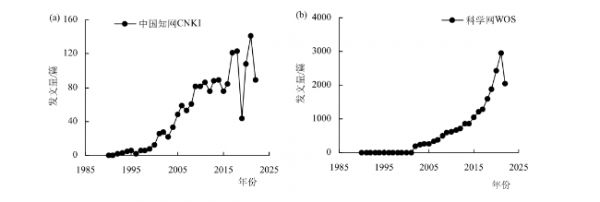
发文量是某领域的外在指示,从发文量的年度变化趋势可整体观察和把握该领域的发展动态,也可反映一个国家/地区的整体科研实力和国际影响力[30]。国内外对农业废弃物资源化利用领域的年度发文量如图1所示,总体来看,国内外对该领域的发文量均呈J型增长趋势,并且英文的年均发文量(996篇)显著高于中文年均发文量(54篇),其中英文发文总量是中文发文总量的12.6倍。对于国内来说(图1a),在1990—1999年间年发文量平均不足10篇,发文量较少,说明此时期国内对农业废弃物资源化利用方面的研究刚起步。2000—2015年间年度发文量呈线性递长,年均发文量约为60篇。2016年以后年均发文量为120篇(2019年除外,可能是受新冠肺炎疫情影响发文量为44篇),说明国内对农业废弃物资源化利用方面的研究受到越来越多的重视。对于国外来说(图1b),1990—2001年期间英文文献几乎没有出现与农业废弃物资源化利用相关的文章,与国内相比,国外对该领域的研究起步较晚。2002年的年度发文量为184篇,之后呈J型增长态势,此时期国际上对该领域的研究热度明显高于国内,国内外发文量差距在逐年扩大,说明2002年后该领域受到了全球范围内的广泛关注,国际对该领域的研究热度及重视程度远高于国内。
Full size|PPT slide
某领域的SCI收录的数量反映了一个国家(地区)的整体科研实力和影响力。在英文文献国家发文量中(图2a),中国的发文量最高(为3948篇),占比率为25.7%,是排名第二(印度)的1.5倍,是排名第三(美国)和排名第四(西班牙)的1.7倍和2.9倍,可见中国在农业废弃物资源化利用领域的研究处于领先地位,对全球农业废弃物的处置贡献较大。在国家发文量可视化图谱中(图2b),中国在该领域的研究贡献最大(圆点越大,贡献率越大),且与美国、印度两国的合作关系最为紧密(连线越粗,表示合作越密切),与西班牙、意大利、英国等国家的合作较为松散;对于发文总量排名第二的美国,除了与中国和印度密切合作之外,与西班牙、巴西、马来西亚等国家合作也较为紧密。该结果说明中国与西方国家(如英国、西班牙、意大利和巴西等)的合作仍有待加强。
2.2 活跃作者群体分析
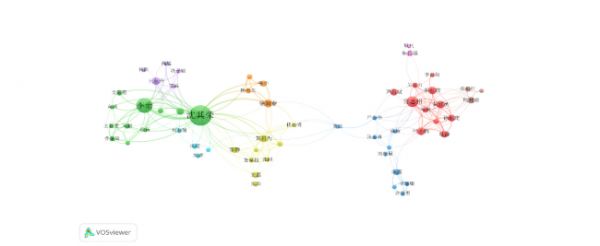
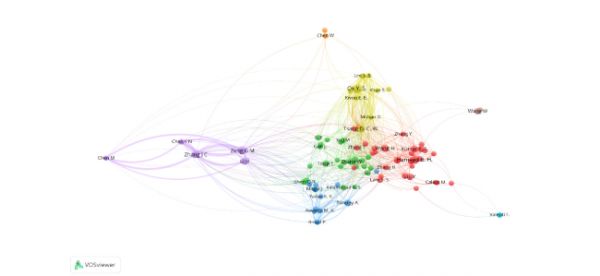
学术活跃作者是推动某个领域学科发展的重要力量。通过对上述筛选的中英文文献作者统计分析,分别挖掘出205位和89位被引学者,摸清了该领域的被引学者及其合作关系。在中文文献当中(图3),先后出现了沈其荣、李荣、常志州、黄红英、黄启为、徐阳春、李霞、王东升、杨林章和朱昌雄等高被引学者,并形成了以高被引学者为集群的合作网络。然而,合作网络呈现较强的区域性合作,并且合作关系较为松散,有待进一步加强。在外文文献中(图4),出现了Hameed B H、Ok Y S、Zeng G M、Zhang W、Wang H、Liu Y、Li H、Pandey A和Lee S S等高被引作者,与中文合作关系相比,国外作者合作关系较为紧密,说明在该领域研究热度较高。在中文文献TOP10作者发文量当中(图5a),沈其荣发表的中文文献量最多为48篇,张俊飚和李荣分别发表24篇和20篇,其他学者的发文量均在20篇以下;外文文献TOP10作者当中(图5b),发文量最高的为Ok Y S和Zeng G M两位学者,发文量依次为43篇和41篇,Senthil Kumar P、Hameed B H和Tsang D等发文量均在40篇以下,并且仅有一位中国学者在列,可见中国在农业废弃物资源化利用领域的研究虽然年发文量较高,但影响力较低,亟需进一步加强。通过对中英文TOP10作者发文量分析得知,以沈其荣、Ok Y S为首的高被引学者发文量也相对较高,说明这些学者也是农业废弃物资源化利用领域的领军人物,研究方向对于挖掘该领域的前沿动态及其发展现状具有较高的参考价值。
Full size|PPT slide
Full size|PPT slide
2.3 研究热点分析
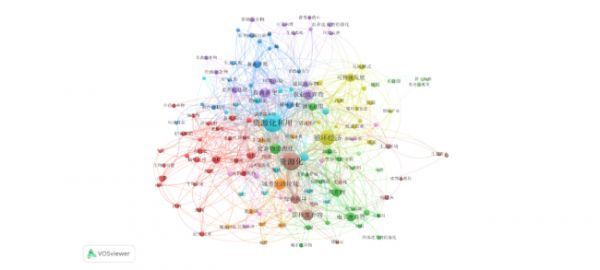
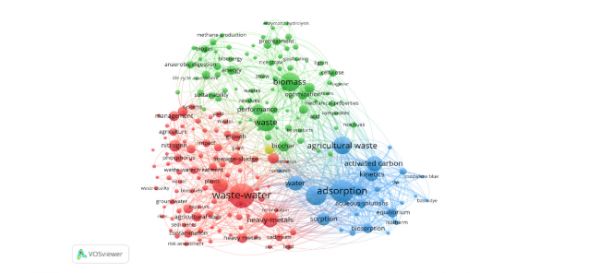
关键词是文献的研究内容与主题的高度概括,有助于读者了解该领域的发展历程和规律[31]。通过对中文文献1990—2022年间出现的关键词频次进行聚类分析,如图6所示(圆点越大代表出现频次越高),从出现的高频关键中可以将其分为4类:(1)废弃物的来源和类别(如农作物秸秆、蔬菜废弃物、生活垃圾、城市污泥、城市废弃物、固体废弃物、电子废弃物、皮革废弃物、垃圾分类等);(2)种植类废弃物的利用(如秸秆还田、生物有机肥、耗氧发酵、饲料化、生物质炭等);(3)畜禽粪便的处置及危害(如无害化处理、资源化利用、沼气工程、农业面源污染、环境治理等);(4)可持续的循环发展模式(如循环经济、循环农业、低碳农业、资源型农业、减量化、再生利用、清洁生产等)。在英文核心关键词图谱中(图7),大致可分为3个方向:(1)围绕废弃物对水体、植物的毒害作用展开(红色圆点,如废水、污染、污水污泥、农业土壤、重金属、植物、氮、磷等);(2)围绕生物质材料的吸附作用展开(蓝色圆点,如生物吸附、活性炭、生物质炭、农业废弃物、动力学、平衡、等温线等);(3)围绕生物质能源化利用展开(绿色圆点,如生物质能源、甲烷、沼气、生物乙醇、有机酸等)。通过比较中英文核心关键词可视化图谱可知,国内外对于废弃物资源化利用领域的研究热点并不完全相同,国内主要集中在养殖、种植及农业加工过程中产生的废弃物的循环利用上,具体利用方式更偏向于废弃物资源化的循环利用;而国外的研究主要集中在废弃物对水体、植物的不利影响以及废弃物的材料化和能源化利用方面。
Full size|PPT slide
Full size|PPT slide
0}9}=='sec'" m-for-array="{{custom_ref.citedCount>0}8}" m-for-val="custom_sec" m-for-template-ref="template_secL">2.4 关键词时空突现分析
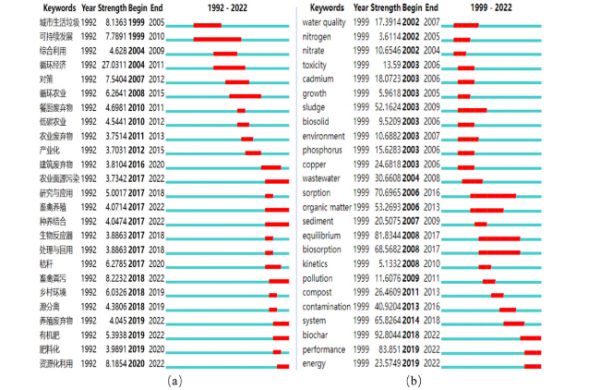
关键词突现图谱可定量表示不同研究热点的热度及变迁规律,关键词突现强度越大说明该主题研究热度越大。通过对1990—2022年间国内外对于农业废弃物资源化利用领域关键词进行时空突现分析,可准确分析出该领域的发展态势及演变规律。在中文文献中(图8-a),1999—2016年间突现的关键词有城市生活垃圾、可持续发展、循环经济、循环农业、餐厨废弃物、低碳农业、农业废弃物、产业化和建筑废弃物等,这段时期更关注的是农业循环发展模式及废弃物来源等方向,对于农业废弃物资源化利用意识开始形成;在2017—2020年期间,出现了农业面源污染、畜禽养殖、种养结合、处理与回用、秸秆、养殖废弃物、有机肥和资源化利用等核心关键词,研究热点转向农业废弃物资源化利用,重点关注的是利用秸秆、养殖废弃物生产有机肥。外文文献中(图8-b),2002—2006年间出现了水质、氮、磷、污泥、镉和铜等核心关键词,研究热点主要集中在废弃物对环境(尤其是水质)产生的不利影响;2008—2017年间出现了吸附、平衡和生物吸附等关键词,研究更倾向于生物质材料的吸附作用;2018年之后出现了生物质炭、性能、能源等关键词,研究热点向生物质的能源化方向过渡。比较中英文文献关键词突现强度发现,国内近30 a来研究更注重循环农业产业的发展,国外更侧重于将废弃物作为生物质吸附剂和能源化利用。
Full size|PPT slide
0}7}=='sec'" m-for-array="{{custom_ref.citedCount>0}6}" m-for-val="custom_sec" m-for-template-ref="template_secL">2.5 展望
随着国内农村经济发展,农业废弃物产量持续增加,农业废弃物处理需求持续增长,据统计,2020年国内秸秆产生量为8.05亿t,可收集资源量为6.74亿t[32]。农业废弃物的无害化、减量化、资源化利用可减少对生态环境的污染,是实现绿色、循环、低碳、高效和可持续发展的有效途径。本研究通过对近30年来国内外发表的与农业废弃物资源化利用相关的文献数据进行统计分析发现,当前国内对农业废弃物资源化利用的研究热点主要是将其直接还田、腐熟后作为有机肥施用到农田中或将其加工后用于畜禽养殖;国外的研究热点集中在将废弃物作为生物质吸附剂和能源化利用(如生产甲烷、沼气、生物乙醇、有机酸等)。
除了上述研究热点外,近年来国内外对农业废弃物的处置方式也得到了一些拓展(如图9-a),受到关注的还有基质化、材料化和能源化方向的利用机理[33⇓⇓-36]。将农业废弃物加工成基质原料,用于栽培食用菌和花卉,或投喂高蛋白黑水虻、蝇蛆和蚯蚓等以及将其饲料化用于畜禽养殖所产生的蛆渣、蚓粪等,用于发展种养结合的绿色循环农业[37]。目前中国在该领域的研究尚处于起步阶段,未来应在实践的基础上进行针对性的优化和改进,也应注重研究开发新的废弃物资源化利用途径,使其更加生态、经济、高效。同时,利用高纤维性废弃物生产纳米纤维素材料[38⇓⇓-41]、纸板、餐盒、轻型建材板和新型保温材料[42]等也受到了许多关注,虽然具有隔热、隔温、防水和降噪等优点,但其生物可降解性、经济性以及是否会产生二次污染等还有待进一步研究。除此之外,随着全球能源和不可再生资源的耗竭,将农业废弃物作为其主要代替品成为全球共识,目前生物质能源已逐渐成为替代煤、石油、天然气的第四大能源库[43],因此,在遵循绿色、循环、低碳、高效的理念下,深入挖掘农业废弃物的多元化处置方式,以便科学、合理地将生物质资源转化为生物乙醇、生物质氢等具有更安全且可再生的清洁能源[44⇓⇓⇓-48],同时将产生的废气、废热、废渣进行回收利用[49⇓-51],以降低生物质的使用成本并减少CO2等温室气体排放,这些也是未来的重要研究方向。基于中国人多地少的基本国情以及优质资源储量大幅降低的前提下,在确保14亿人口口粮绝对安全下,应该努力拓宽农业废弃物的资源化利用方式,将农业废弃物原材料进行分类处置,针对原材料属性分别用于基质化、饲料化、肥料化、材料化和能源化,同时将废气、废热、废渣进行回收利用,以实现生物质资源的无害化、减量化、多元化的多级利用(图9-b)。
0}5}=='sec'" m-for-array="{{custom_ref.citedCount>0}4}" m-for-val="custom_sec" m-for-template-ref="template_secL">0}3}=='sec'" m-for-array="{{custom_ref.citedCount>0}2}" m-for-val="custom_sec" m-for-template-ref="template_secL">3 结论
(1)国内对该领域的研究起步早于国外近10 a,从2002年开始国际上对该领域的研究热度和重视程度明显高于国内,发文量均呈快速(J型)增长趋势,国内外发文量差距也在逐年扩大。
(2)国内外对于农业废弃物资源化利用领域的研究热点并不相同:国内主要集中在养殖、种植及农业加工过程中产生的废弃物循环利用上,具体利用方式更偏向于废弃物的资源化循环利用;而国外的研究主要集中在废弃物对水体、植物的不利影响以及废弃物的材料化和能源化利用方面。
(3)基于中国人多地少的基本国情,未来国内应该努力拓宽农业废弃物的处置方式,将农业废弃物原材料进行分类处置,随后用于基质化、饲料化、肥料化、材料化和能源化,同时将废气、废热、废渣进行回收利用,以实现生物质资源的多元化利用。
0}1}=='sec'" m-for-array="{{custom_ref.citedCount>0}0}" m-for-val="custom_sec" m-for-template-ref="template_secL">{{custom_citationIndex}5}
=2" class="main_content_center_left_zhengwen_bao_erji_title main_content_center_left_one_title" style="font-size: 16px;">{{custom_citationIndex}1}{{custom_ref.citationList}8}[1]曹曼. “一带一路”背景下我国生物质能源发展的机遇与挑战[J]. 低碳世界, 2019, 9(8):31-32.
{{custom_ref.citationList}6}https://doi.org/{{custom_ref.citationList}2}https://www.ncbi.nlm.nih.gov/pubmed/{{custom_ref.id}8}{{custom_ref.id}4}本文引用 [{{custom_ref.citedCount}5}]摘要{{custom_citationIndex}3}[2]许红星. 我国能源利用现状与对策[J]. 中外能源, 2010, 15(1):3-14.
{{custom_citationIndex}1}https://doi.org/{{custom_ref.citationList}7}https://www.ncbi.nlm.nih.gov/pubmed/{{custom_ref.citationList}3}{{custom_ref.bodyP_ids}9}本文引用 [{{custom_ref.bodyP_ids}0}]摘要{{custom_bodyP_id}8}[3]RAMOS J L,
PAKUTS B,
GODOY P, et al. Addressing the energy crisis: using microbes to make biofuels[J]. Microbial biotechnology, 2022, 15(4):1026-1030.
Much of the energy being used to power our lives comes from fossil fuels such as coal, natural gas and petroleum. These energy sources are non-renewable, are being exhausted and also pollute the air, water and soil with toxic chemicals. Their mining, transportation, refining and use are associated with a large carbon footprint that contributes significantly to global warming. In addition, the geopolitical complexities surrounding the main fossil fuel producers create risks and uncertainties around the world. Replacing fossil fuels with clean, renewable forms of energy is paramount to creating a sustainable and healthy future, and for laying the foundations for global political stability and prosperity. Using biomass from plants, microbes can produce biofuels that are identical to or perform as well as fossil fuels. In addition of creating sustainable energy, advancing the biofuel industry will create new, high-quality rural jobs whilst improving energy security.© 2022 The Authors. Microbial Biotechnology published by Society for Applied Microbiology and John Wiley & Sons Ltd.
{{custom_bodyP_id}6}https://doi.org/{{custom_bodyP_id}2}https://www.ncbi.nlm.nih.gov/pubmed/{{custom_citation.annotation}8}{{custom_citation.annotation}4}本文引用 [{{custom_citation.annotation}5}]摘要{{custom_citation.annotation}3}[4]SARANGI P K,
SINGH T A,
SINGH N J, et al. Sustainable utilization of pineapple wastes for production of bioenergy, biochemicals and value-added products: A review[J]. Bioresource technology, 2022, 351:127085.
{{custom_citation.annotation}1}https://doi.org/{{custom_citation.annotation}7}https://www.ncbi.nlm.nih.gov/pubmed/{{custom_citation.annotation}3}{{custom_citation.annotation}9}本文引用 [{{custom_citation.annotation}0}]摘要{{custom_citation.annotation}8}[5]SCHUSTER B G,
CHINN M S. Consolidated Bioprocessing of lignocellulosic feedstocks for ethanol fuel production[J]. Biornergy research, 2013, 6(2):416-435.
{{custom_citation.annotation}6}https://doi.org/{{custom_citation.annotation}2}https://www.ncbi.nlm.nih.gov/pubmed/{{custom_ref.citationList}8}{{custom_ref.citationList}4}本文引用 [{{custom_citation.content}5}]摘要{{custom_citation.doi}3}[6]AHMED B,
ABOUDI K,
TYAGI V K, et al. Improvement of anaerobic digestion of lignocellulosic biomass by hydrothermal pretreatment[J]. Applied sciences, 2019, 9(18):3853.
Lignocellulosic biomass, comprising of cellulose, hemicellulose, and lignin, is a difficult-to-degrade substrate when subjected to anaerobic digestion. Hydrothermal pretreatment of lignocellulosic biomass could enhance the process performance by increasing the generation of methane, hydrogen, and bioethanol. The recalcitrants (furfurals, and 5-HMF) could be formed at high temperatures during hydrothermal pretreatment of lignocellulosic biomass, which may hinder the process performance. However, the detoxification process involving the use of genetically engineered microbes may be a promising option to reduce the toxic effects of inhibitors. The key challenge lies in the scaleup of the hydrothermal process, mainly due to necessity of upholding high temperature in sizeable reactors, which may demand high capital and operational costs. Thus, more efforts should be towards the techno-economic feasibility of hydrothermal pre-treatment at full scale.
{{custom_citation.doi}1}https://doi.org/{{custom_citation.doi}7}https://www.ncbi.nlm.nih.gov/pubmed/{{custom_citation.doi}3}{{custom_citation.doi}9}本文引用 [{{custom_citation.doi}0}]摘要{{custom_citation.pmid}8}[7]ALI S S,
NUGENT B,
MULLINS E, et al. Fungal-mediated consolidated bioprocessing: The potential of fusarium oxysporum for the lignocellulosic ethanol industry[J]. AMB express, 2016, 6(1):1-13.
{{custom_citation.pmid}6}https://doi.org/{{custom_citation.pmid}2}https://www.ncbi.nlm.nih.gov/pubmed/{{custom_citation.pmid}8}{{custom_citation.pmid}4}本文引用 [{{custom_citation.pmid}5}]摘要{{custom_citation.pmid}3}[8]PANDEY A,
KUMAR B. Utilization of Agricultural and Industrial Waste as Replacement of Cement in Pavement Quality Concrete: A Review[J]. Environmental science and pollution research, 2022, 29(17):24504-24546.
{{custom_citation.pmid}1}https://doi.org/{{custom_citation.url}7}https://www.ncbi.nlm.nih.gov/pubmed/{{custom_citation.url}3}{{custom_citation.url}9}本文引用 [{{custom_citation.url}0}]摘要{{custom_citation.url}8}[9]OCAK S,
ACAR S. Biofuels from wastes in the Marmara Region, Turkey: potentials and constraints[J]. Environmental science and pollution research, 2021, 28(46):66026-66042.
{{custom_citation.url}6}https://doi.org/{{custom_citation.url}2}https://www.ncbi.nlm.nih.gov/pubmed/{{custom_citationIndex}8}{{custom_citationIndex}4}本文引用 [{{custom_ref.citationList}5}]摘要{{custom_citation.annotation}3}[10]武肖媛. 农业固体废弃物资源化利用研究[J]. 环境与发展, 2018, 30(8):50-51.
{{custom_citation.annotation}1}https://doi.org/{{custom_citation.annotation}7}https://www.ncbi.nlm.nih.gov/pubmed/{{custom_citation.annotation}3}{{custom_ref.citedCount>0}9}0}8}=={{custom_ref.citedCount>0}7}.length-1) || ({{custom_ref.citedCount>0}6} && {{custom_ref.citedCount>0}5}!='')" class="mag_main_zhengwen_left_div_ckwx_table_benwenyiny mag_rich_ref_abstract">本文引用 [{{custom_ref.citedCount>0}0}]摘要{{custom_ref.citationList}8}[11]李贺, 郭海滨, 魏雅冬. 农作物秸秆及食用菌菌渣等农业废弃物资源化利用现状分析[J]. 现代农业研究, 2022, 28(5):17-19.
{{custom_ref.citationList}6}https://doi.org/{{custom_ref.citationList}2}https://www.ncbi.nlm.nih.gov/pubmed/{{custom_ref.id}8}{{custom_ref.id}4}本文引用 [{{custom_ref.citedCount}5}]摘要{{custom_citationIndex}3}[12]卞荣军, 李恋卿. 生物质废弃物处理与农业碳中和[J]. 科学, 2021, 73(6):22-26.
{{custom_citationIndex}1}https://doi.org/{{custom_ref.citationList}7}https://www.ncbi.nlm.nih.gov/pubmed/{{custom_ref.citationList}3}{{custom_ref.bodyP_ids}9}本文引用 [{{custom_ref.bodyP_ids}0}]摘要{{custom_bodyP_id}8}[13]MILLATI R,
CAHYONO R B,
ARIYANTO T, et al. Agricultural, industrial, municipal, and forest wastes[M]. Environmental research, 2019:1-22.
{{custom_bodyP_id}6}https://doi.org/{{custom_bodyP_id}2}https://www.ncbi.nlm.nih.gov/pubmed/{{custom_citation.annotation}8}{{custom_citation.annotation}4}本文引用 [{{custom_citation.annotation}5}]摘要{{custom_citation.annotation}3}[14]KUMLA J,
SUWANNARACH N,
SUJARIT K, et al. Cultivation of mushrooms and their lignocellulolytic enzyme production through the utilization of agro-industrial waste[J]. Molecules, 2020, 25(12): 2811.
A large amount of agro-industrial waste is produced worldwide in various agricultural sectors and by different food industries. The disposal and burning of this waste have created major global environmental problems. Agro-industrial waste mainly consists of cellulose, hemicellulose and lignin, all of which are collectively defined as lignocellulosic materials. This waste can serve as a suitable substrate in the solid-state fermentation process involving mushrooms. Mushrooms degrade lignocellulosic substrates through lignocellulosic enzyme production and utilize the degraded products to produce their fruiting bodies. Therefore, mushroom cultivation can be considered a prominent biotechnological process for the reduction and valorization of agro-industrial waste. Such waste is generated as a result of the eco-friendly conversion of low-value by-products into new resources that can be used to produce value-added products. Here, we have produced a brief review of the current findings through an overview of recently published literature. This overview has focused on the use of agro-industrial waste as a growth substrate for mushroom cultivation and lignocellulolytic enzyme production.
{{custom_citation.annotation}1}https://doi.org/{{custom_citation.annotation}7}https://www.ncbi.nlm.nih.gov/pubmed/{{custom_citation.annotation}3}{{custom_citation.annotation}9}本文引用 [{{custom_citation.annotation}0}]摘要{{custom_citation.annotation}8}[15]POONAM N,
PAL C R. Facile Synthesis of Nanocellulose from wheat straw as an agricultural waste[J]. Iranian polymer journal, 2022, 31(6): 771-778.
{{custom_citation.annotation}6}https://doi.org/{{custom_citation.annotation}2}https://www.ncbi.nlm.nih.gov/pubmed/{{referenceList}8}{{referenceList}4}本文引用 [{{custom_ref.id}5}]摘要{{custom_index}3}[16]刘坤. 农业废弃物资源化利用的现实意义与对策建议[J]. 环境与发展, 2017, 29(5):254-256.
{{custom_index}1}https://doi.org/{{custom_ref.nian}7}https://www.ncbi.nlm.nih.gov/pubmed/{{custom_ref.nian}3}{{custom_ref.citedCount}9}本文引用 [{{custom_ref.citedCount}0}]摘要{{custom_ref.citationList}8}[17]杨少杰, 李欣苗, 李艳, 等. 尾菜烧制木炭处理技术[J]. 现代农业科技, 2020(6):161-162.
{{custom_ref.citationList}6}https://doi.org/{{custom_ref.citationList}2}https://www.ncbi.nlm.nih.gov/pubmed/{{custom_citation.content}8}{{custom_citation.content}4}本文引用 [{{custom_citation.doi}5}]摘要{{custom_citation.doi}3}[18]BK A,
MY A,
MPS B. Agricultural waste management strategies for environmental sustainability[J]. Environmental research, 2022, 206:112285.
{{custom_citation.doi}1}https://doi.org/{{custom_citation.doi}7}https://www.ncbi.nlm.nih.gov/pubmed/{{custom_citation.doi}3}{{custom_citation.doi}9}本文引用 [{{custom_citation.doi}0}]摘要{{custom_citation.pmid}8}[19]王强强, 周良田, 王凤娟, 等. 农业废弃物在农业绿色循环发展中的应用[J]. 绿色科技, 2018(19):179-182.
{{custom_citation.pmid}6}https://doi.org/{{custom_citation.pmid}2}https://www.ncbi.nlm.nih.gov/pubmed/{{custom_citation.pmid}8}{{custom_citation.pmid}4}本文引用 [{{custom_citation.pmid}5}]摘要{{custom_citation.url}3}[20]平英华, 张飞, 刘先才, 等. 农业废弃物资源化利用模式及主导途径研究[J]. 安徽农业科学, 2019, 47(17):216-219.
{{custom_citation.url}1}https://doi.org/{{custom_citation.url}7}https://www.ncbi.nlm.nih.gov/pubmed/{{custom_citation.url}3}{{custom_citation.url}9}本文引用 [{{custom_citation.url}0}]摘要{{custom_citationIndex}8}[21]汪筱琳, 郭丹. 我国农业废弃物资源化处理现状及问题分析[J]. 河北农机, 2021, 283(9):167-168.
{{custom_citationIndex}6}https://doi.org/{{custom_citationIndex}2}https://www.ncbi.nlm.nih.gov/pubmed/{{custom_ref.citationList}8}{{custom_ref.citationList}4}本文引用 [{{custom_citation.annotation}5}]摘要{{custom_citation.annotation}3}[22]焦铭泽, 闫铭, 薛春瑜, 等. 碳中和目标下农村地区生物质清洁供暖碳减排及经济性分析[J]. 可再生能源, 2022, 40(11):1436-1441.
{{custom_citation.annotation}1}0}9}!=''" class="new_full_rich_cankaowenxian_zuozhe new_full_rich_cankaowenxian_lianjie">https://doi.org/{{custom_ref.citedCount>0}7}0}6} && {{custom_ref.citedCount>0}5}!=''" class="new_full_rich_cankaowenxian_zuozhe new_full_rich_cankaowenxian_lianjie">https://www.ncbi.nlm.nih.gov/pubmed/{{custom_ref.citedCount>0}3}0}2} && {{custom_ref.citedCount>0}1}!=''" class="new_full_rich_cankaowenxian_zuozhe new_full_rich_cankaowenxian_lianjie">{{custom_citationIndex}9}本文引用 [{{custom_citationIndex}0}]摘要{{custom_ref.id}8}[23]蔡建军, 王清成, 王全. 我国农业废弃物资源化应用技术[J]. 贵州农业科学, 2014(7):181-184.
{{custom_ref.id}6}https://doi.org/{{custom_ref.id}2}https://www.ncbi.nlm.nih.gov/pubmed/{{custom_ref.citedCount}8}{{custom_ref.citedCount}4}本文引用 [{{custom_citationIndex}5}]摘要{{custom_ref.citationList}3}[24]陈利洪, 舒帮荣, 李鑫. 华东地区农业废弃物资源量估算及其综合利用评价[J]. 江苏农业科学, 2018, 46(13):251-255.
{{custom_ref.citationList}1}https://doi.org/{{custom_ref.bodyP_ids}7}https://www.ncbi.nlm.nih.gov/pubmed/{{custom_ref.bodyP_ids}3}{{custom_ref.id}9}本文引用 [{{custom_ref.id}0}]摘要{{custom_citation.annotation}8}[25]杨佩林. 中国农业废弃物资源化利用的现状及展望[J]. 种子科技, 2019, 37(14):131-132.
{{custom_citation.annotation}6}https://doi.org/{{custom_citation.annotation}2}https://www.ncbi.nlm.nih.gov/pubmed/{{custom_citation.annotation}8}{{custom_citation.annotation}4}本文引用 [{{custom_citation.annotation}5}]摘要{{custom_citation.annotation}3}[26]WEI J,
LIANG G,
ALEX J, et al. Research progress of energy utilization of agricultural waste in China: bibliometric analysis by citespace[J]. Sustainability, 2020, 12(3):812.
Energy utilization of agricultural waste, due to the depletion of petroleum resources and the continuous deterioration of the ecological environment, has become an increasingly important development area at present, with broad prospects. The Citespace software was used to systematically summarize the research hotspots, development, and frontiers of researches on the energy utilization of agricultural waste in China from 1999 to 2018. The results show that (1) the number of publications in this field has increased, which includes a steady development stage, a rapid development stage, and a fluctuation and decline stage. (2) Research hotspots focused on technology for energy utilization of agricultural waste, benefits analysis of energy utilization of agricultural waste, energy conversion and upgrading path of agricultural waste, and energy potential of agricultural waste. (3) Development of research hotspots go through five stages: “technology for energy utilization of straw and the disposal of livestock and poultry waste”, “exploration of energy utilization mode of agricultural waste and the disposal of by-product from energy utilization of agricultural waste”, “technology upgrading from agricultural waste to fuel ethanol and recycling of livestock and poultry waste”, “resource recycling of by-product from biogas ” and “energy utilization of livestock and slaughterhouse waste”. It has revealed the focus in this field was changing from planting waste to breeding waste, and from unprocessed waste to by-product from energy utilization. (4) Energy utilization of slaughterhouse waste and cow manure has started to be considered as the frontiers of researches.
{{custom_citation.annotation}1}https://doi.org/{{custom_citation.annotation}7}https://www.ncbi.nlm.nih.gov/pubmed/{{custom_citation.annotation}3}{{custom_citation.annotation}9}本文引用 [{{custom_citation.annotation}0}]摘要{{fundList_cn}8}[27]颜佳旺, 熊康宁, 刘肇军, 等. 基于文献计量学的中国农业废弃物能源化研究情况[J]. 贵州农业科学, 2021, 49(1):136-142.
{{fundList_cn}6}https://doi.org/{{fundList_cn}2}https://www.ncbi.nlm.nih.gov/pubmed/{{custom_fund}8}{{custom_fund}4}本文引用 [{{custom_ref.citedCount}}]摘要{{custom_citation.annotation}}[28]王吉平, 苏天明, 张野, 等. 基于文献计量学的农业废弃物资源化利用研究现状及态势分析[J]. 湖南生态科学学报, 2021, 8(1):58-69.
{{custom_citation.content}}https://doi.org/{{custom_citation.doi}}https://www.ncbi.nlm.nih.gov/pubmed/{{custom_citation.pmid}}{{custom_citation.url}}本文引用 [{{custom_ref.citedCount}}]摘要{{custom_citation.annotation}}[29]陈艳, 王香春, 蔡文婷, 等. 园林垃圾资源化处理技术研究进展——基于Citespace和VOSViewer知识图谱分析[J]. 环境卫生工程, 2021, 29(2):22-34.
{{custom_citation.content}}https://doi.org/{{custom_citation.doi}}https://www.ncbi.nlm.nih.gov/pubmed/{{custom_citation.pmid}}{{custom_citation.url}}本文引用 [{{custom_ref.citedCount}}]摘要{{custom_citation.annotation}}[30]李龙威, 张頔, 徐建玲, 等. 基于文献计量的农业废弃物研究现状与发展趋势分析[J]. 东北师大学报(自然科学版), 2020, 52(3):150-156.
{{custom_citation.content}}https://doi.org/{{custom_citation.doi}}https://www.ncbi.nlm.nih.gov/pubmed/{{custom_citation.pmid}}{{custom_citation.url}}本文引用 [{{custom_ref.citedCount}}]摘要{{custom_citation.annotation}}[31]曹燕, 胡双庆, 沈根祥, 等. 基于文献计量的畜禽养殖废弃物新污染物研究态势分析[J]. 农业环境科学学报, 2021, 40(11):2296-2304.
{{custom_citation.content}}https://doi.org/{{custom_citation.doi}}https://www.ncbi.nlm.nih.gov/pubmed/{{custom_citation.pmid}}{{custom_citation.url}}本文引用 [{{custom_ref.citedCount}}]摘要{{custom_citation.annotation}}[32]陈冠益, 孙志利, 程占军, 等. 人居环境改善与乡村振兴相向而行的资源清洁利用技术发展模式——以华北、东北村镇有机废弃物利用为例[J]. 农业资源与环境学报, 2022, 39(6):1079-1088.
{{custom_citation.content}}https://doi.org/{{custom_citation.doi}}https://www.ncbi.nlm.nih.gov/pubmed/{{custom_citation.pmid}}{{custom_citation.url}}本文引用 [{{custom_ref.citedCount}}]摘要{{custom_citation.annotation}}[33]王明友, 宋卫东, 王教领, 等. 基于食用菌生产的农业废弃物基质化利用研究进展[J]. 山东农业科学, 2017, 49(1):155-159.
{{custom_citation.content}}https://doi.org/{{custom_citation.doi}}https://www.ncbi.nlm.nih.gov/pubmed/{{custom_citation.pmid}}{{custom_citation.url}}本文引用 [{{custom_ref.citedCount}}]摘要{{custom_citation.annotation}}[34]BABU S,
SINGH R S,
SINGH R, et al. Exploring agricultural waste biomass for energy, food and feed production and pollution mitigation: a review[J]. Bioresource technology, 2022, 360:127566.
{{custom_citation.content}}https://doi.org/{{custom_citation.doi}}https://www.ncbi.nlm.nih.gov/pubmed/{{custom_citation.pmid}}{{custom_citation.url}}本文引用 [{{custom_ref.citedCount}}]摘要{{custom_citation.annotation}}[35]FENG G A,
YHZ A,
YAN W B, et al. A review of the synthesis of carbon materials for energy storage from biomass and coal/heavy oil waste[J]. New carbon materials, 2021, 36(1):34-48.
{{custom_citation.content}}https://doi.org/{{custom_citation.doi}}https://www.ncbi.nlm.nih.gov/pubmed/{{custom_citation.pmid}}{{custom_citation.url}}本文引用 [{{custom_ref.citedCount}}]摘要{{custom_citation.annotation}}[36]BELLUCCI M,
BORRUSO L,
PIERGIACOMO F, et al. The effect of substituting energy crop with agricultural waste on the dynamics of bacterial communities in a two-stage anaerobic digester[J]. Chemosphere, 2022, 294:133776.
{{custom_citation.content}}https://doi.org/{{custom_citation.doi}}https://www.ncbi.nlm.nih.gov/pubmed/{{custom_citation.pmid}}{{custom_citation.url}}本文引用 [{{custom_ref.citedCount}}]摘要{{custom_citation.annotation}}[37]任灵肖, 刘佩, 井润梓, 等. 种养结合循环绿色农牧业发展技术模式[J]. 现代农村科技, 2021, 600(8):45.
{{custom_citation.content}}https://doi.org/{{custom_citation.doi}}https://www.ncbi.nlm.nih.gov/pubmed/{{custom_citation.pmid}}{{custom_citation.url}}本文引用 [{{custom_ref.citedCount}}]摘要{{custom_citation.annotation}}[38]高磊鑫, 郑梦龙, 邹之铤, 等. 生物质废弃物制纳米纤维素及电化学应用研究[J]. 环境科学与管理, 2021, 46(9):84-87.
{{custom_citation.content}}https://doi.org/{{custom_citation.doi}}https://www.ncbi.nlm.nih.gov/pubmed/{{custom_citation.pmid}}{{custom_citation.url}}本文引用 [{{custom_ref.citedCount}}]摘要{{custom_citation.annotation}}[39]LIU C,
LI B,
DU S H, et al. Properties of nanocellulose isolated from corncob residue using sulfuric acid, formic acid, oxidative and mechanical methods[J]. Carbohydrate polymers, 2016, 151:716-724.
In this work, nanocellulose was extracted from bleached corncob residue (CCR), an underutilized lignocellulose waste from furfural industry, using four different methods (i.e. sulfuric acid hydrolysis, formic acid (FA) hydrolysis, 2,2,6,6-tetramethylpiperidine-1-oxyl (TEMPO)-mediated oxidation, and pulp refining, respectively). The self-assembled structure, morphology, dimension, crystallinity, chemical structure and thermal stability of prepared nanocellulose were investigated. FA hydrolysis produced longer cellulose nanocrystals (CNCs) than the one obtained by sulfuric acid hydrolysis, and resulted in high crystallinity and thermal stability due to its preferential degradation of amorphous cellulose and lignin. The cellulose nanofibrils (CNFs) with fine and individualized structure could be isolated by TEMPO-mediated oxidation. In comparison with other nanocellulose products, the intensive pulp refining led to the CNFs with the longest length and the thickest diameter. This comparative study can help to provide an insight into the utilization of CCR as a potential source for nanocellulose production. Copyright © 2016 Elsevier Ltd. All rights reserved.
{{custom_citation.content}}https://doi.org/{{custom_citation.doi}}https://www.ncbi.nlm.nih.gov/pubmed/{{custom_citation.pmid}}{{custom_citation.url}}本文引用 [{{custom_ref.citedCount}}]摘要{{custom_citation.annotation}}[40]CHEN L,
SUN S,
YAO B, et al. Effects of straw return and straw biochar on soil properties and crop growth: a review[J]. Frontiers in plant science, 2022, 13: 986763.
Straw return is an effective method for disposing agricultural residues. It not only utilizes agricultural waste but also improves soil. In the current review, different crop straw and its characteristics were highlighted, and patterns of straw return were explored (including straw return, straw biochar return, and their combined with fertilizer return), as well as their environmental impacts were outlined. In addition, the effects of straw return and straw biochar amendment on soil properties [e.g., pH, soil organic carbon (SOC), soil nitrogen (N)/phosphorus (P)/potassium (K), soil enzyme activities, and soil microbes] were discussed. Information collected from this review proposed that straw return and straw biochar return or in combination with fertilizer is an applicable way for improving soil fertility and enhancing crop production. Straw return is beneficial to soil physicochemical properties and soil microbial features. The rice straw has positive impacts on crop growth. However, there are different climate types, soil types and crops in China, meaning that the future research need long-term experiment to assess the complex interactions among straw, soil, and plant eco-systems. Accordingly, this review aims to provide available information on the application of straw return in terms of different patterns of its to justify and to expand their effective promotion.
{{custom_citation.content}}https://doi.org/{{custom_citation.doi}}https://www.ncbi.nlm.nih.gov/pubmed/{{custom_citation.pmid}}{{custom_citation.url}}本文引用 [{{custom_ref.citedCount}}]摘要{{custom_citation.annotation}}[41]PAVALAYDON K,
RAMASAWMY H,
SURROOP D, et al. Comparative evaluation of cellulose nanocrystals from bagasse and coir agro-wastes for reinforcing pva-based composites[J]. Environment development and sustainability, 2022, 24(8):9963-9984.
{{custom_citation.content}}https://doi.org/{{custom_citation.doi}}https://www.ncbi.nlm.nih.gov/pubmed/{{custom_citation.pmid}}{{custom_citation.url}}本文引用 [{{custom_ref.citedCount}}]摘要{{custom_citation.annotation}}[42]MOHAMMED A A B A,
OMRAN A A B,
HASAN Z, et al. Wheat biocomposite extraction, structure, properties and characterization: A review[J]. Polymers, 2021, 13(21):3624.
Biocomposite materials create a huge opportunity for a healthy and safe environment by replacing artificial plastic and materials with natural ingredients in a variety of applications. Furniture, construction materials, insulation, and packaging, as well as medical devices, can all benefit from biocomposite materials. Wheat is one of the world’s most widely cultivated crops. Due to its mechanical and physical properties, wheat starch, gluten, and fiber are vital in the biopolymer industry. Glycerol as a plasticizer considerably increased the elongation and water vapor permeability of wheat films. Wheat fiber developed mechanical and thermal properties as a result of various matrices; wheat gluten is water insoluble, elastic, non-toxic, and biodegradable, making it useful in biocomposite materials. This study looked at the feasibility of using wheat plant components such as wheat, gluten, and fiber in the biocomposite material industry.
{{custom_citation.content}}https://doi.org/{{custom_citation.doi}}https://www.ncbi.nlm.nih.gov/pubmed/{{custom_citation.pmid}}{{custom_citation.url}}本文引用 [{{custom_ref.citedCount}}]摘要{{custom_citation.annotation}}[43]秦延山. 生物质秸秆燃料的应用分析[J]. 化工管理, 2014, 325(3):156-157.
{{custom_citation.content}}https://doi.org/{{custom_citation.doi}}https://www.ncbi.nlm.nih.gov/pubmed/{{custom_citation.pmid}}{{custom_citation.url}}本文引用 [{{custom_ref.citedCount}}]摘要{{custom_citation.annotation}}[44]黄丽菁, 吴彩文, 邹春阳, 等. 木质素与酶的作用机制及其在纤维素酶水解中的影响研究进展[J]. 西北林学院学报, 2021, 36(2):142-148.
{{custom_citation.content}}https://doi.org/{{custom_citation.doi}}https://www.ncbi.nlm.nih.gov/pubmed/{{custom_citation.pmid}}{{custom_citation.url}}本文引用 [{{custom_ref.citedCount}}]摘要{{custom_citation.annotation}}[45]陈倩, 陈京环, 王堃, 等. 热水预处理生物质原料及其生物转化研究进展[J]. 林业科学, 2017, 53(9):97-104.
{{custom_citation.content}}https://doi.org/{{custom_citation.doi}}https://www.ncbi.nlm.nih.gov/pubmed/{{custom_citation.pmid}}{{custom_citation.url}}本文引用 [{{custom_ref.citedCount}}]摘要{{custom_citation.annotation}}[46]GUPTA N,
MAHUR B K,
IZRAYEEL A M D, et al. Biomass conversion of agricultural waste residues for different applications: a comprehensive review[J]. Environmental science and pollution research, 2022, 29(49):73622-73647.
{{custom_citation.content}}https://doi.org/{{custom_citation.doi}}https://www.ncbi.nlm.nih.gov/pubmed/{{custom_citation.pmid}}{{custom_citation.url}}本文引用 [{{custom_ref.citedCount}}]摘要{{custom_citation.annotation}}[47]SRIVASTAVA R K,
SHETTI N P,
REDDY K R, et al. Biomass utilization and production of biofuels from carbon neutral materials[J]. Environmental pollution, 2021, 276:116731.
{{custom_citation.content}}https://doi.org/{{custom_citation.doi}}https://www.ncbi.nlm.nih.gov/pubmed/{{custom_citation.pmid}}{{custom_citation.url}}本文引用 [{{custom_ref.citedCount}}]摘要{{custom_citation.annotation}}[48]VAID S,
SHARMA S,
DUTT h C, et al. One Pot consolidated bioprocess for conversion of saccharum spontaneum biomass to ethanol-biofuel[J]. Energy conversion and management, 2021, 250:114880.
{{custom_citation.content}}https://doi.org/{{custom_citation.doi}}https://www.ncbi.nlm.nih.gov/pubmed/{{custom_citation.pmid}}{{custom_citation.url}}本文引用 [{{custom_ref.citedCount}}]摘要{{custom_citation.annotation}}[49]陈盼, 施晓清. 京津冀电子废弃物回收利用潜力预测及环境效益评估[J]. 环境科学, 2020, 41(4):1976-1986.
{{custom_citation.content}}https://doi.org/{{custom_citation.doi}}https://www.ncbi.nlm.nih.gov/pubmed/{{custom_citation.pmid}}{{custom_citation.url}}本文引用 [{{custom_ref.citedCount}}]摘要{{custom_citation.annotation}}[50]CHEN J,
XING Y,
WANG Y, et al. Application of iron and steel slags in mitigating greenhouse gas emissions: A review[J]. The science of the total environment, 2022, 844:157041.
{{custom_citation.content}}https://doi.org/{{custom_citation.doi}}https://www.ncbi.nlm.nih.gov/pubmed/{{custom_citation.pmid}}{{custom_citation.url}}本文引用 [{{custom_ref.citedCount}}]摘要{{custom_citation.annotation}}[51]WANG S Q,
WAN Z,
HAN Y, et al. A review on lignin waste valorization by catalytic pyrolysis: catalyst, reaction system, and industrial symbiosis mode[J]. Journal of environmental chemical engineering, 2023, 11:109113.
{{custom_citation.content}}https://doi.org/{{custom_citation.doi}}https://www.ncbi.nlm.nih.gov/pubmed/{{custom_citation.pmid}}{{custom_citation.url}}本文引用 [{{custom_ref.citedCount}}]摘要{{custom_citation.annotation}}{{custom_ref.label}}{{custom_citation.content}}https://doi.org/{{custom_citation.doi}}https://www.ncbi.nlm.nih.gov/pubmed/{{custom_citation.pmid}}{{custom_citation.url}}本文引用 [{{custom_ref.citedCount}}]摘要{{custom_citation.annotation}}基金
国家自然科学基金青年基金“磷酸盐强化铁氧化物-腐殖酸复合体调控水稻根系细胞壁固定镉的分子机制”(42007103)
河南省科技攻关项目“铁氧化物-腐殖酸复合体强化小麦根系细胞壁阻控镉的机制及关键技术研究”(222102110048)
河南农业大学科技创新基金“基于LCD模型的磷酸盐强化土壤矿物-腐殖酸微界面固定镉、铅的机制研究”(KJCX2020A18)
{{custom_fund}}相关知识
农业废弃物资源化利用的国内外研究热点和发展趋势分析
未来农业废弃物资源化利用的作用、地位和效益将越发突出
利用农业废弃物生产生物有机肥料现状及前景.pdf
茶废弃物资源化及其在环境治理中的应用研究进展
食用菌废弃物资源化利用模式及关键技术研究与应用
“点屑成金”,变废为宝:祁门县农林废弃物资源化利用成效凸显
福建省农业厅关于印发种养业废弃物资源化利用制度和种养结合循环农业制度实施方案的通知
茶产业废弃物循环经济发展浅析
近年国内外健康教育研究现状、热点及趋势的可视化分析
2026中国维生素行业市场发展规模与趋势分析
网址: 农业废弃物资源化利用的国内外研究热点和发展趋势分析 https://www.trfsz.com/newsview1928115.html
推荐资讯




- 1发朋友圈对老公彻底失望的心情 12775
- 2BMI体重指数计算公式是什么 11235
- 3补肾吃什么 补肾最佳食物推荐 11199
- 4性生活姿势有哪些 盘点夫妻性 10428
- 5BMI正常值范围一般是多少? 10137
- 6在线基础代谢率(BMR)计算 9652
- 7一边做饭一边躁狂怎么办 9138
- 8从出汗看健康 出汗透露你的健 9063
- 9早上怎么喝水最健康? 8613
- 10五大原因危害女性健康 如何保 7828