
The WHO Child Growth Standards
This web site presents the WHO Child Growth Standards. These standards were developed using data collected in the WHO Multicentre Growth Reference Study. The site presents documentation on how the physical growth curves and motor milestone windows of achievement were developed as well as application tools to support the implementation of the standards
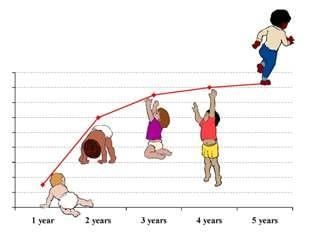
Press release
Training course and other tools
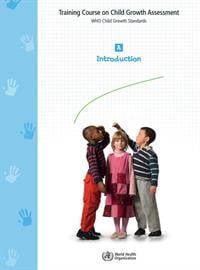
Overview
The Training Course on Child Growth Assessment is a tool for the application of the WHO Child Growth Standards. It is intended primarily for health care providers who measure and assess the growth of children or who supervise these activities. The course is designed for use over 3 1/2 days. It teaches how to measure weight, length and height, how to interpret growth indicators, investigate causes of growth problems and counsel caregivers.
Course modules and growth records
Job aids
The WHO child age calculator (a rotating disk mounted on a calendar in PVC material) for calculating child age is part of the course materials that will be made available in WHO Regional Offices when the trainers of trainers workshops are conducted in the respective Regions.
Other tools
Another set of tools consists of growth charts for boys and girls up to age five (60 completed months): length/height-for-age, weight-for-age, weight-for-length/height, and body mass index-for-age. These charts are complemented by windows of achievement for the following six gross motor milestones: sitting without support, standing with assistance, hands-and-knees crawling, walking with assistance, standing alone, walking alone.
The links below permit users to download or view an anthropometry training video. This video describes the MGRS measurement procedures and how to calibrate the measuring equipment. It is available in English, French and Spanish.
Anthropometry training video
A copy of the video as DVD or VHS (in NTSC or PAL format) can also be ordered from the following email address nutrition@who.int
Basic guidelines
The global target for 2025 will be achieved if high burden countries take stock of their current prevalence, projected population growth, underlying causes...
Exclusive breastfeeding – defined as the practice of only giving an infant breast-milk for the first 6 months of life (no other food or water) –...
There has been a dramatic rise in the numbers of children under 5 years of age who are overweight. According to the new 2013 United Nations Children’s...
Low birth weight is defined by the World Health Organization (WHO) as weight at birth less than 2500 g (5.5 lb). Low birth weight continues to be a significant...
Childhood stunting is one of the most significant impediments to human development, globally affecting approximately 162 million children under the age...
Anaemia impairs health and well being in women and increases the risk of maternal and neonatal adverse outcomes. Anaemia affects half a billion women of...
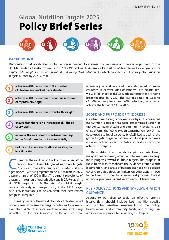
Recognizing that accelerated global action is needed to address the pervasive and corrosive problem of the double burden of malnutrition, in 2012 the World...
Infographics
Are We Growing Right?' displays and posters for the WHO Child Growth Standards
Posters are available as a set of 5.
Other tools
Endorsements
Related links
相关知识
[The application of the National Standards for Students' Physical Health (2014 revision) in SPSS]
Occupational Health & Safety Standards & Best Practices
Families access CDC tools on child development
How Pediatric Nutritional Counseling Supports Healthy Growth
China releases action plan to improve child health
The miraculous effect of lemon on health
Growth hormone, athletic performance, and aging
产后体型恢复
Newborns: improving survival and well
WHO Guidelines
网址: The WHO Child Growth Standards https://www.trfsz.com/newsview1716895.html
推荐资讯



- 1发朋友圈对老公彻底失望的心情 12775
- 2BMI体重指数计算公式是什么 11235
- 3补肾吃什么 补肾最佳食物推荐 11199
- 4性生活姿势有哪些 盘点夫妻性 10428
- 5BMI正常值范围一般是多少? 10137
- 6在线基础代谢率(BMR)计算 9652
- 7一边做饭一边躁狂怎么办 9138
- 8从出汗看健康 出汗透露你的健 9063
- 9早上怎么喝水最健康? 8613
- 10五大原因危害女性健康 如何保 7828