
DASH Eating Plan
Description of the DASH Eating Plan
The DASH eating plan requires no special foods and instead provides daily and weekly nutritional goals. This plan recommends:
Eating vegetables, fruits, and whole grainsIncluding fat-free or low-fat dairy products, fish, poultry, beans, nuts, and vegetable oilsLimiting foods that are high in saturated fat, such as fatty meats, full-fat dairy products, and tropical oils such as coconut, palm kernel, and palm oilsLimiting sugar-sweetened beverages and sweetsBased on these recommendations, the following table shows examples of daily and weekly servings that meet DASH eating plan targets for a 2,000-calorie-a-day diet.
Food GroupDaily ServingsGrains6–8Meats, poultry, and fish6 or lessVegetables4–5Fruit4–5Low-fat or fat-free dairy products2–3Fats and oils2–3Sodium2,300 mg* Weekly ServingsNuts, seeds, dry beans, and peas4–5Sweets5 or less*1,500 milligrams (mg)sodium lowers blood pressure even further than 2,300 mg sodium daily.
When following the DASH eating plan, it is important to choose foods that are:
Low in saturated and trans fatsRich in potassium, calcium, magnesium, fiber, and proteinLower in sodiumThe number of servings you should have each day depends on your daily calorie needs. Use these worksheets to see how your current eating habits compare to DASH. Find what counts as a serving size and more:
What's on Your Plate? (1,200 calories/day)What's on Your Plate? (1,400–1,600 calories/day)What's on Your Plate? (1,800–2,000 calories/day)What's on Your Plate? (2,600 calories/day)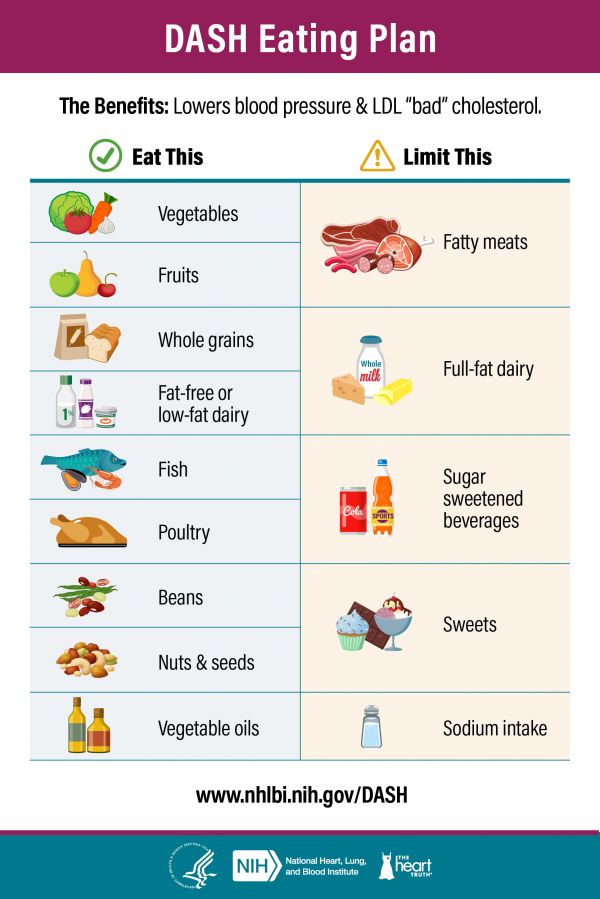 Eat this: vegetables, fruits, whole grains, fat-free or low-fat dairy, fish, poultry, beans, nuts and seeds, vegetable oils. Limit this: fatty meats, full-fat dairy, sugar sweetened beverages, sweets, sodium intake.